
 Share
Share
Abstract
This paper analyses the level of stress between the high school learners who participate in co-curricular activities. Data were measured using descriptive and comparative survey design approach where 150 students took part in filling a structured questionnaire that involved the Perceived Stress Scale (PSS). The results showed that the population that participated in co-curricular activities like sports and music had greatly reduced levels of stress as compared to the non-participants. The more time spent in such activities, the higher the emotional well-being. The emotional well-being was lower in non-participants, as they faced a lot of stress because of academic pressure and the inability to manage their time properly. The findings communicate the importance of co-curricular activities in stress management and healthier whole development of students.
Keywords: Stress levels, Co-curricular activities, High school students, Academic pressure, Time management, Emotional well-being.
Introduction
The issue of stress among students in high schools is increasingly gaining prominence since it is caused by academic pressure, competition with peers, family expectations, as well as the dynamics of time management. Young people are emotionally and psychologically stressed at this critical stage of their development and the same may hamper their academic progress, mental condition, and well-being. In this regard, extra-curriculum activities namely sports, arts, debates and music, have been identified to startup as an important avenue of reducing pressure, interacting with people and enhancing complete growth.
This paper intends to compare the stress level among students that take co-curricular activities and those that do not take it. At the same time, analyzing the difference in the intensity of stress depending on the form and duration of participation in an activity, the study aims at defining whether they can be used to relieve psychological pressure or not. The results ought to underscore the need to include co-curricular schemes in school systems in order to establish a healthy and just learning milieu.
Literature Review
Hasan (2024) carried out a comparative study to assess the anxiety toward English speaking among the students who joined the English Club in extracurricular activities and those who did not. It was found that students in these types of clubs were found to be experiencing a major reduction in anxiety and emotional stability was thereby well affected in a language learning situation which thus gave a positive significant indication that structured co-curricular involvement was well functioning in enhancing emotional comfort and confidence of communication.
Kelbiso (2019) analyzed the activities and obstacles that implementation of co-curricular programs in educational organizations involved. In the study, it was pointed out that the schools where such programs seemed to be important lacked in certain aspects to make it viable and effective such as lack of resources, insufficient planning, and less teacher input to hinder the possible success of such programs in terms of enhancing learners.
Kozan (2024) addressed the role of language-based extracurricular activity on the productive skills and English attitude in 7th grade students. These findings have proved that the program of active participation in co-curricular language programs did not only help the students to develop writing and speaking skills but also get a better attitude and motivation to English language learning, which can lead to the inclusion of such activity in mainstream programs.
Research Methodology
This research had descriptive and comparative survey research design and had the sample of stratified random sample of 150 high school students. The data were measured through the use of structured questionnaires and the descriptive analysis used to generate the outcomes of the study in terms of patterns of stress based on co-curricular involvement.
Research Design
The study used a descriptive and comparative survey study design in order to investigate the comparison in levels of stress between the high school students with those who were involved in the co-curriculum activities and those who were not. The study was conducted in order to define the distribution, reasons, and difference of stress according to the degree of activity, kind of activity, and time involved.
Population and Sample
The sample was high school students in some schools. Stratified random sample size of 150 students was also selected on proportional basis where both groups (those who took part in co-curriculum activities and those who did not) get equal representation i.e. 75 students and 75 students respectively.
Data Collection Method
The structured questionnaire was in two parts and was used as primary data collected in mass form.
- A section about demographics and activities (type of activity, time spent, etc.).
- A generalized Perceived Stress Scale (PSS) that measures the degree of stress (Low, Moderate and High).
Students were also requested to describe what they consider as the causes of their stress (academic pressure, peer pressure, etc.) through a checklist format to facilitate the analysis using causes.
Data Analysis Tools
Descriptive measures on collected data were used and included among others, frequency, percentages, and cross-tabulations. The results were provided in the form of percentage tables and figures (bar charts/ figures) to contrast the stress levels among groups and variables (e.g., the type of activity, the level of time spent). They put an interpretation using trends and difference in the data.
Data Analysis and Interpretation
Table 1 and Figure 1 are used to explain the correlation between the number of hours spent on the co-curricular related activities every week and the stress level in the students who attended the course. The data will be classified in three groups, which are shorter than 2 hours, between 2-4 hours, and longer than 4 hours laying out time weekly. The result of each group reflects on the number of students with low, moderate and high stress as a percentage.
Table 1: Time Spent on Co-Curricular Activities vs. Stress
| Time Spent/Week | Low Stress (%) | Moderate Stress (%) | High Stress (%) | No. of Students |
| Less than 2 hours | 20% | 65% | 15% | 25 |
| 2–4 hours | 30% | 60% | 10% | 30 |
| More than 4 hours | 35% | 55% | 10% | 20 |
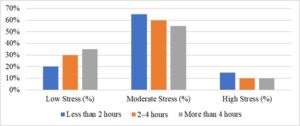
Figure 1: Graphical Representation of Time Spent on Co-Curricular Activities vs. Stress
The results show that the hours dedicated to the co-curricular activities are negatively correlated with the level of stress. Students who are participants of more than 4 hours a week report the greatest percentage of low stress (35%) and the least high stress (10%). In comparison, the level of stress is greater among the people who spend less than 2 hours in the park, with 65 percent experiencing moderate stress. The implication is that the positive relationship between the co-curricular activity and respectively diminishing stress and improvement in the emotional status are all the more possible with more activity participation.
Table 2 and Figure 2 are used to show the stress level distribution between the students based on the form of co-curricular activities in which they are engaged in. There are four categories taken i.e. Sports, Music/Dance, Debates/Elocution and Arts and Crafts. The results are reported as the percentage of the students with low, moderate and high stress levels in each group of activities.
Table 2: Type of Co-Curricular Activity and Stress Level Among Participants
| Activity Type | Low Stress (%) | Moderate Stress (%) | High Stress (%) | Number of Students |
| Sports | 35% | 55% | 10% | 20 |
| Music/Dance | 30% | 60% | 10% | 15 |
| Debates/Elocution | 20% | 65% | 15% | 20 |
| Arts & Crafts | 25% | 60% | 15% | 20 |
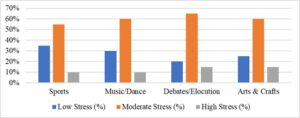
Figure 2: Graphical Representation of Type of Co-Curricular Activity and Stress Level Among Participants
The findings indicate that the students with both expressive and physical activity, such as Sports (35% low stress) and Music/Dance (30% low stress), demonstrate lower levels of stress as contrasted with their more intellectual or confrontational programs, such as Debates/Elocution (20% low stress). Furthermore, moderate stress level is a little bit more widespread in debates and the acts related to creative fields and arts (15 percent), it means that it is creative or verbal performance pressure that can lead to the increase of the level of stress, whereas physical and rhythmic activities are associated with great stress-reduction potential.
In table 3 and Figure 3, the prime causes of stress experienced by the participants and non-participants in co-curricular activities are presented. The reasons above consist of Academic Pressure, Peer Pressure, Family Expectations, Social Media Influence and Lack of Time Management with a percentage explaining the number of students in each group who cited them among the major causes of stress.
Table 3: Major Reported Causes of Stress Among All Students
| Cause of Stress | Participants (%) | Non-Participants (%) |
| Academic Pressure | 45% | 65% |
| Peer Pressure | 20% | 25% |
| Family Expectations | 15% | 20% |
| Social Media Influence | 10% | 12% |
| Lack of Time Management | 10% | 22% |
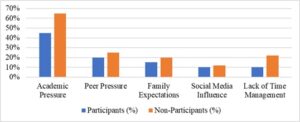
Figure 3: Graphical Representation of Major Reported Causes of Stress Among All Students
The data indicate that academic pressure is the major stressor among the two groups but it is much higher among the non-participants (65) than the participants (45). On the same note, unavailability of time management (22%) and family expectations (20%) are more prevalent among non-participants. This is an indication that students in co-curricular activities might acquire greater coping abilities as well as better time management and as such, relatively lower levels of academic and personal stress.
Conclusion
The study concludes that high school students who actively participate in co-curricular activities experience lower levels of stress compared to their non-participating peers. The findings reveal that greater time investment in activities such as sports and music is associated with reduced stress, while academic pressure and poor time management are more prominent stressors among non-participants. Furthermore, students involved in physical and expressive activities reported better emotional well-being, highlighting the importance of co-curricular engagement as a buffer against academic and social stressors. These results emphasize the need for schools to encourage and integrate co-curricular programs into the academic framework to promote a balanced and healthier school experience for students.
References:
- Erçakır Kozan, B. (2024). The effects of language oriented extra-curricular activities on 7th grade students’ productive skills and attitudes towards English language.
- Evariste, S., & Andala, H. O. (2020). Sports Games Participation and Students’ Academic Performance in Rwanda: A Case Study of Gatsibo District. Journal of Education, 3(2).
- Hasan, H. P. (2024). Comparing levels of English-speaking anxiety among English Club extracurricular and non-English Club extracurricular students. RETAIN: Journal of Research in English Language Teaching, 12(02), 15-23.
- Kelbiso, B. (2019). Practice and challenges of implementing co-curricular activities: The case. Environmental protection, 14, 9-3.
- Kozan, B. E. (2024). The Effects of Language Oriented Extra-Curricular Activities on 7th Grade Students’ Productive Skills and Attitudes Towards English Language (Doctoral dissertation, Middle East Technical University (Turkey)).
- Lewis, A. R. (2024). The Impact of Missouri State High School Activities Association (MSHSAA) Extracurricular Activities on Student Performance (Doctoral dissertation, University of Missouri-Kansas City).
- Moss-Hasan, P. (2019). A Comparative Study on the Effectiveness of an Extended Day Program (Doctoral dissertation, Kean University).
- Olewnik, A., Chang, Y., & Su, M. (2023). Co-curricular engagement among engineering undergrads: do they have the time and motivation?. International Journal of STEM Education, 10(1), 27.
- Shaffer, M. L. (2019). Education beyond the Academic World: The Importance and Impact of Co-curricular and Extracurricular Activities for High School Students (Doctoral dissertation, Robert Morris University).
- Stephenson, B., Cakitaki, M. B., & Luckman, M. M. (2021, March). Ghost student” failure among equity cohorts: Towards understanding Non-Participating Enrolments (NPE).
Statements & Declarations:
Peer-Review Method: This article underwent double-blind peer review by two external reviewers.
Competing Interests: The author/s declare no competing interests.
Funding: This research received no external funding.
Data Availability: Data are available from the corresponding author on reasonable request.
Licence: Comparative Study on the Level of Stress between High School Students Participating and Non-Participating in Co-Curricular Activities © 2025 by M. K.Uma is licensed under CC BY-NC-ND 4.0. Published by ShodhManjusha.
Ethical Statement: The study involved the participation of minors. Prior permission was obtained from educational authorities, and informed consent was secured from parents/guardians. The research was conducted following ethical guidelines for research involving children, ensuring confidentiality, voluntary participation, and protection of participants from any harm.