
 Share
Share
Abstract
The paper finds out the effect of green branding on consumer loyalty in the Indian Fast-Moving Consumer Goods (FMCG) industry using a descriptive-analytical study. A structured questionnaire with 150 respondents was used to gather data in which aspects of consumer awareness, brand switching willingness to pay a premium, and consumer awareness regarding green initiatives were evaluated. Results demonstrate that 83.4 percent of consumers are somewhat ready to spend more in order to consume green products, and more than 63 percent of them have been crossing the brands on the basis of lack of sustainability. The social media and product packaging took the lead to become the most popular sources of green information. It makes a conclusion that green branding is really effective in strengthening consumer loyalty and provides tactical advantage to FMCG firms operating in India.
Keywords: Green Branding, Consumer Loyalty, Indian FMCG Sector, Sustainable Marketing, Brand Switching, Eco-Conscious Consumers.
Introduction
The emergence of green branding has gained momentum because of the increasing importance of environmental awareness by consumers and the desire by consumers, who want more sustainable corporate behavior. Firms also employ green branding to win the attention of environmentally-sensitive clients through their products, services and actions, which possess some positive impact on the environment. The Indian Fast-Moving Consumer Goods (FMCG) industry is one of the competitive and rapidly developing marketplaces, and the companies embed sustainability as part of the values in order to attract the audience and form a strong base of clients.
Environmental responsibility of the brand, quality and pricing of the product now has an impact on consumer loyalty which is the key to corporate sustainability. Eco-friendliness has triggered repeat buying as well as brand advocacy in India because of the fact that more people now view green branding as a major influencer. The current research paper explores the relationship between green branding practices and consumer loyalty towards the Indian FMCG market on the way of consumer awareness, brand switching behaviour and willingness to pay the premium price in favours of environmental performances.
Literature Review
Ali et al. (2024) carried out an empirical study to examine how the green marketing strategies affect the environmental and market performance of companies in the consumer goods industries. They discovered that adoption of environmentally friendly marketing principles was not only beneficial concerning the effect of the environment of these subjects but also it helped them in improving their position and market performance. The paper has focused on the strategic value of aligning sustainability initiatives with the fundamental business objectives in order to realise the long-term success.
Khanna (2023) discussed how consumer buying behavior is influenced by sustainable marketing practices undertaken by the food and beverage industry in FMCG sector. Her research proved that consumers preferred more and more brands with observable efforts in sustainability and this has a decisive impact on their buying intentions. The study pointed out that ethical and environmental consciousness of the consumer became dominant featuring in this industry.
Mandalawatta and Ahsan (2024) evaluated the green branding and brand preference and added customer perceived value as the moderating variable. Their findings revealed that green branding had a positive influence on the brand preference, especially where consumers believed that there was increased value in the environment commitment of the brand. This research highlighted the importance of the perceived value to reinforce the strength of the green branding campaigns.
Research Methodology
This research was conducted in terms of descriptive-analytical research design using the convenience sampling method to analyze the data of 150 FMCG consumers. It employed both the quantitative and qualitative methodologies where it used the frequency and percentage distribution to observe the effectiveness of green branding in consumer loyalty.
Research Design
This research employed descriptive and analytical research design through which it conducted a study to find out how the effect of green branding impacts on consumer loyalty within the Indian FMCG. It compared consumer behavior and preferences, awareness and was able to relate the green branding factors to the patterns of consumer loyalty.
Sampling Method and Sample Size
The non-probability approach of convenience sample was employed in the study based on the information of 150 FMCG consumers in India, whereby they represented the diversity in terms of age, gender, and occupational background.
Data Collection Tool
The primary data was collected on the study through the use of a self-administered structured questionnaire, online and offline, on different themes:
- Consciousness of green-branding,
- Information sources,
- Premium readiness,
- Brand-switching proclivities as a result of the inexistence of green initiatives,
- Green marketing credibility perceived.
Data Analysis Techniques
The descriptive statistical tools were used in analyzing data, leading to the conclusion that the loyalty behavior of brand consumers is inclined towards the green aspects of branding. The results were tabulated and presented in graphical diagrams to be able to compare and draw up behavioral trends and patterns of consumers.
Data Analysis and Interpretation
Table 1 shows the willingness of consumers to pay a premium on the green FMCG products which varies at a number of levels, such as strongly, moderately, slightly, and not willing. Most of them (36.7) are moderately willing, and secondly is the strongly willing (26.7). It has a minority of 20% people who are a little willing and 16.6 per cent who are reluctant to pay additional money. This allocation assists in tracking consumers who prefer using environmentally friendly products.
Table 1: Willingness to Pay a Premium for Green FMCG Products
| Willingness Level | Frequency (n) | Percentage (%) |
| Strongly Willing | 40 | 26.7% |
| Moderately Willing | 55 | 36.7% |
| Slightly Willing | 30 | 20.0% |
| Not Willing | 25 | 16.6% |
| Total | 150 | 100.0% |
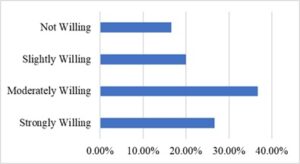
Figure 1: Graphical Representation of Willingness to Pay a Premium for Green FMCG Products
The statistics indicate that the eco-friendly branding will be supported by 83.4 per cent of the consumers who are ready to pay more in order to receive greener products. This means that when Indian FMCG companies invest in sustainability, they can enhance the image of their brands and command a slightly elevated price in case they communicate green value effectively.
Table 2 indicates the location of information about green FMCG products. Social media (33.3%) is the most popular one, with 26.7% reporting that the reason was the product packaging. Also, 20% of interviewees attributed word of mouth and TV/print advertisements as equally important. These findings are depicted in figure 2 whereby the effect of various conduits of information is compared.
Table 2: Sources of Information on Green FMCG Products
| Source of Information | Frequency (n) | Percentage (%) |
| Social media | 50 | 33.3% |
| Product Packaging | 40 | 26.7% |
| Advertisements (TV/Print) | 30 | 20.0% |
| Word of Mouth | 30 | 20.0% |
| Total | 150 | 100.0% |
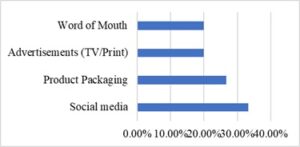
Figure 2: Graphical Representation of Sources of Information on Green FMCG Products
The evidence is found in the fact that social media proves to be the best means of advertising green FMCG products based on the digital engagement of consumers. Packaging of products is noteworthy with an impression of green labelling as far as appearance and awareness are concerned. The impact of traditional media and word of mouth is decreasing, which means that people have switched to the digital area and on-product messages. FMCG companies are advised to focus on social media and green packaging to reach and impact the environmentally conscious buyers.
Table 3 reveals brand switching because of a lack of green initiatives by customers. Approximately 36.6 per cent of respondents infrequently negotiated brand switches, whereas 26.7 per cent of them negotiated brand moves regularly. Owing to this, 20 per cent hardly switched brands and 16.7 per cent never did. We see the results of the influence of sustainability on consumer loyalty in Figure 3.
Table 3: Brand Switching Due to Lack of Green Initiatives
| Response Category | Frequency (n) | Percentage (%) |
| Frequently Switched Brands | 40 | 26.7% |
| Occasionally Switched | 55 | 36.6% |
| Rarely Switched | 30 | 20.0% |
| Never Switched | 25 | 16.7% |
| Total | 150 | 100.0% |
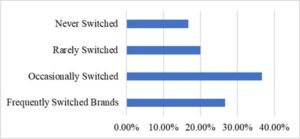
Figure 3: Graphical Representation of Brand Switching Due to Lack of Green Initiatives
The statistics indicate that 63.3 per cent of consumer will abandon their brand in case they do not see any green activities. There is an increased interest in the possibility of sustainable choices in consumer decision-making. Eco-unfriendly brands are in danger of losing a significant portion of their sales. Therefore, the visible and reputable green strategies are morally acceptable and essential in retaining a market share in the highly competitive Indian business of FMCG highly competitive companies.
Conclusion
The results of this research show clearly that Indian green branding is considerable as it contributes to influencing consumer loyalty in the Indian FMCG industry. Most of the consumers were willing to spend extra money to purchase the eco-friendly products, and they were inclined to change the brands in case green initiatives were absent. The most informative source has been found to be social media, which has been followed by the product packaging, and this shows how crucial it is to have open and accessible information. These insights further indicate the increasing consumer inclination towards sustainability and that FMCG brands keen in going green can achieve a competitive edge, instil long-lasting brand allegiance and record overall improvement in their performance excellence.
References:
- Adhikari, S., & Sapkota, A. (2024). The Influence of Corporate Social Responsibility on Brand Loyalty Among FMCG Consumers in the Kathmandu Valley. Journal of Business and Social Sciences Research, 9(2), 17-34.
- Agrawal, U., & Ansari, M. (2022). Effect of Green Marketing-Mix on Consumers ‘Intention to Purchase Green Fast-Moving Consumer Goods (FMCG): An Empirical Evidence. Indian Journal of Natural Sciences, 13(73), 45222-45231.
- Ali, S., Khan, K., Haider, S., & Rehman, A. (2024). Analyzing the impact of green marketing strategies on the environmental performance and market performance of companies in the consumer goods sector. Journal of Policy Research, 9(4).
- Khanna, D. (2023). Impact of Sustainable Marketing Practices by the Food & Beverage Industry on Consumer Buying Behaviour in the FMCG Sector (Doctoral dissertation, American Business Management and Technology College (Switzerland)).
- Mandalawatta, S. D., & Ahsan, F. (2024). Impact of Green Branding on Brand Preference: With the Mod-erating Effect of Customer Perceived Value. Archives of Humanities & Social Sciences Research, 1(2), 1-15.
- Naik, B., Meher, S., & Sethy, B. (2023). An empirical study of consumer buying behaviour towards eco-friendly FMCG products in Western Odisha. International Journal of Research in Management, 5(2), 216-220.
- Peiris, T. K. A., Jasingha, D., &Rathnasiri, M. S. H. (2024). Examining the effect of consumption values on green FMCG purchase behaviour: a focus on the theory of consumption values. Management & Sustainability: An Arab Review, 3(4), 385-403.
- Soni, V., Saxena, P., Moid, S., Saxena, A., & Mehta, M. (2024). Identifying the dimensions of philanthropic CSR in the FMCG sector: agenda for the sustainability of business. Corporate Governance: The International Journal of Business in Society, 24(3), 682-700.
- Trivedi, J. P. (2018). Measuring the effect of consumer ethnocentrism and consumer beliefs for herbal products on brand loyalty: a study of Indian FMCG sector. International Journal of Indian Culture and Business Management, 16(3), 323-338.
- Tshuma, S., Muchowe, R., Delight, R., & Dube, M. (2023). Green Branding Influence on Consumer Purchase Intentions on Fast Moving Consumer Goods (FMCGs) in Zimbabwe. Zimbabwe Journal of Business, Economics and Management, 1(2), 158-169.
Statements & Declarations:
Peer-Review Method: This article underwent double-blind peer review by two external reviewers.
Competing Interests: The author/s declare no competing interests.
Funding: This research received no external funding.
Data Availability: Data are available from the corresponding author on reasonable request.
Licence: Green Branding and Its Impact on Consumer Loyalty: An Empirical Analysis of Indian FMCG Sector © 2025 by Krishna Kumar is licensed under CC BY-NC-ND 4.0. Published by ShodjManjusha.
Ethical Statement: This article is based on secondary data, publicly available information, and/or conceptual analysis. No human or animal subjects were involved, and therefore, ethical approval was not required.